
Engaged families are critical to children recovering from learning loss and succeeding in school… and in life.
We know that a child’s learning flourishes when families, schools, and communities work together. To provide the circle of care children in our lowest-income neighborhoods need, we launched FamilyBridge. The program was designed to provide wrap-around services for children and families in our Succeeding by Reading and Path2Math tutoring programs. Connected, wrap-around services will provide children and families with in-home learning expertise, tools, and support to become lifelong learners. We strive for the day when every child and every family has a fairer chance to succeed in school … and in life.
I can help a student reach their potential
Closing the Circle of Care
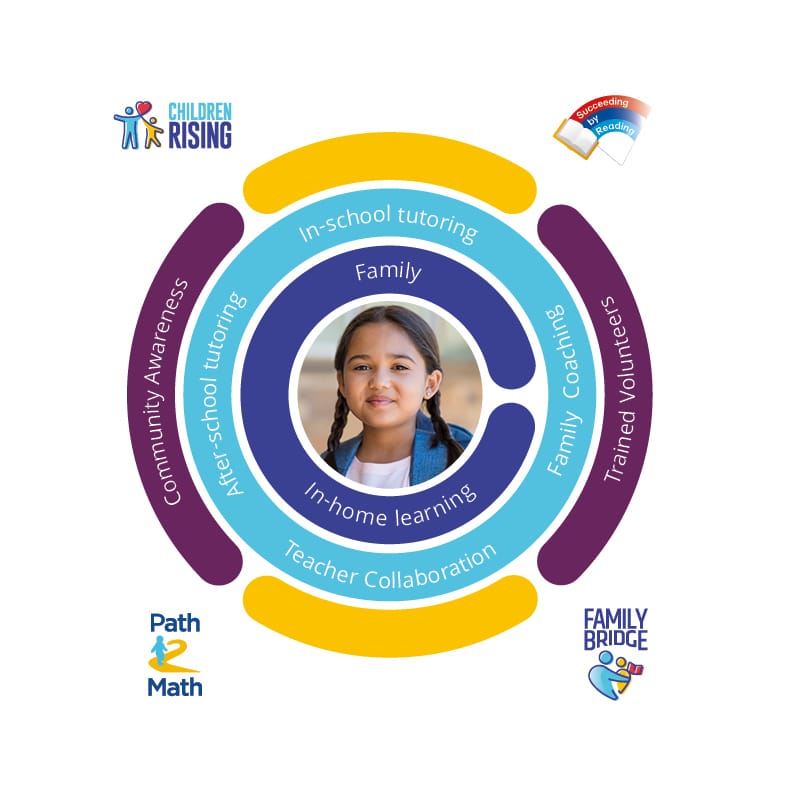
Children Rising programs have collectively evolved to provide more wrap-around services for children and families.
Homework tutoring, summer tutoring, and summer family support offer more opportunities for children and families to bolster their learning. There is no easy fix to overcoming lost learning time. The most effective approach has proven to be more tutoring sessions and increased at-home support. Families, schools, and tutors pour learning experiences into the children.
Technology tools and improved processes measure and provide continual updates on student progress more effectively. The result is increased personalized support for each student and improved communication with the child’s teacher—all focused on accelerating each student’s growth in foundational academic skills.
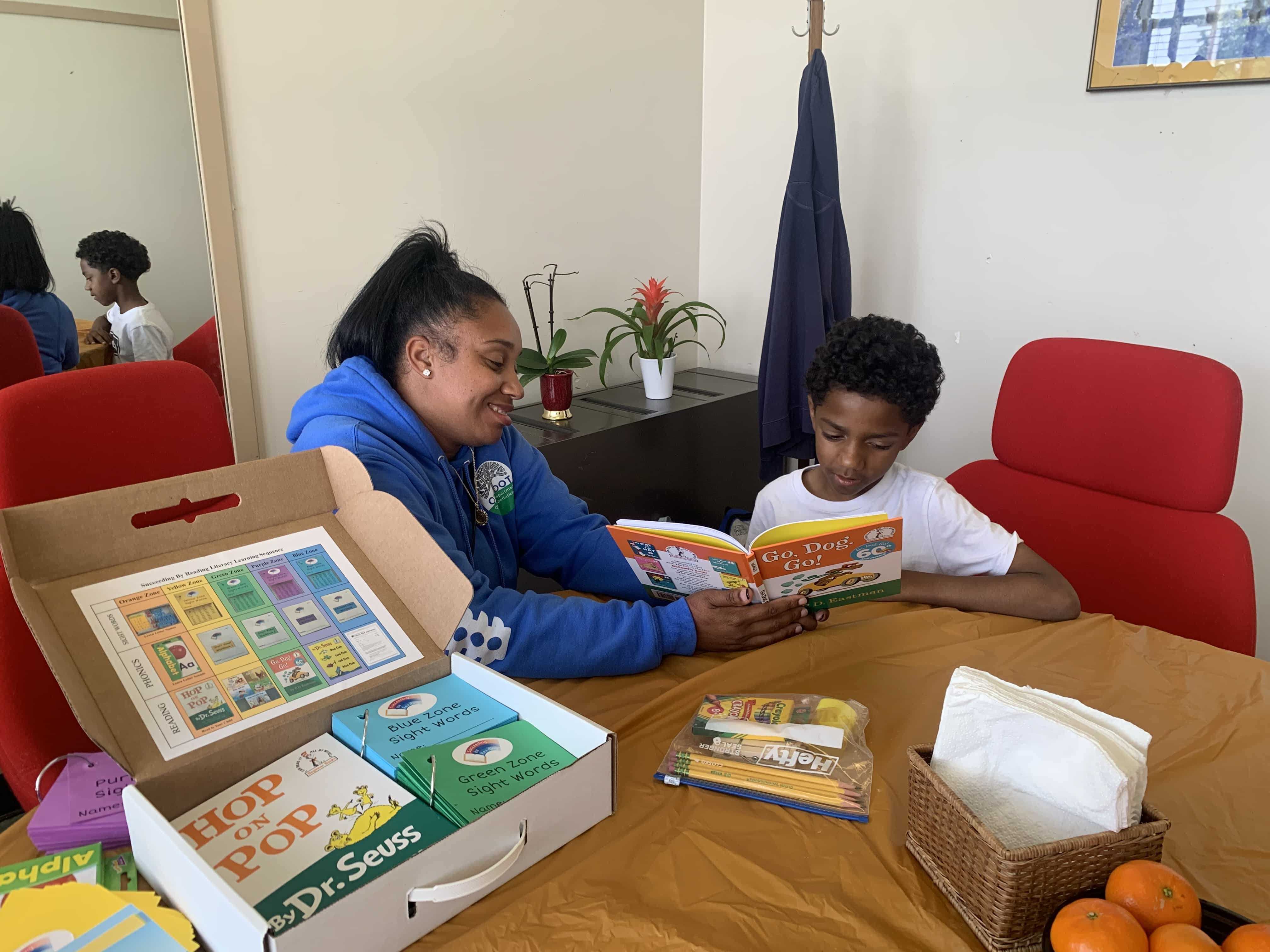
In-home learning tools and training for the families will provide long-term benefits for the children after they have left our program. POWER Packs and FAMLE PAKS, loaded with the same items our well-trained tutors utilize in tutoring clinics, allow parents and caregivers to continue learning at home. We trained parents and caregivers on using the items in the packs to help their children master math concepts.
Children Rising is committed to continued process improvement, further strengthening the circle of care for each child.
2 ways families can collaborate (or partner) with FamilyBridge to accelerate their child’s learning!

1. One-on-One Support – From a posture of humility, FamilyBridge seeks to better understand the needs of each family and explore how best to respond to their child’s academic goals. Most importantly, we want to affirm parents and caregivers in their significant role so they may better guide and advocate for their child’s future.
2. Assist a child with homework – Many parents and caregivers struggle to have enough time after work to provide critical homework support at home for their children. After-school homework tutors support these families by providing one-on-one homework tutoring for second and third-grade students in our Succeeding by Reading and Path2Math programs.
Al-Bara and His Circle of Care
Al-Bara (center, in white) is one of the eager young students in FamilyBridge. Al-bara’s circle of care starts at home. His family was determined to support his learning at home and were among the first to enroll in the new program. While Al-bara worked hard in Path2Math, his parents completed the 30-Day Challenge. They received a FAMLE PAK and were trained on how to use the learning tools to help their child master math concepts, and were trained on IXL, the comprehensive cloud-based math tool used in Path2Math.
Al-Bara’s parents are happy he is more independent in doing his homework. His mother established a routine where Al-Bara spent time on IXL for learning and having fun with his brothers. She said it makes her happy and proud to see them work together to solve math problems while having fun. As a result of his hard work, Al-Bara advanced nearly two grade levels last year.