Our Impact
Thanks to the dedicated volunteers, partners, and staff, Children Rising gives children a fairer chance to succeed in school … and in life..
In Oakland Unified School District (OUSD), the need and urgency for interventional reading and math tutoring is greater than ever. COVID has revealed extraordinary resiliency in our educators, community organizations, and families. They have come together to solve unprecedented challenges exacerbated by pandemic-related learning loss in Oakland schools.
Our partner schools made an urgent plea: “Support the children the pandemic has most severely impacted.”
70% of the fourth and fifth-graders (K and first grade when COVID struck) were two or more years behind grade-level math skills.
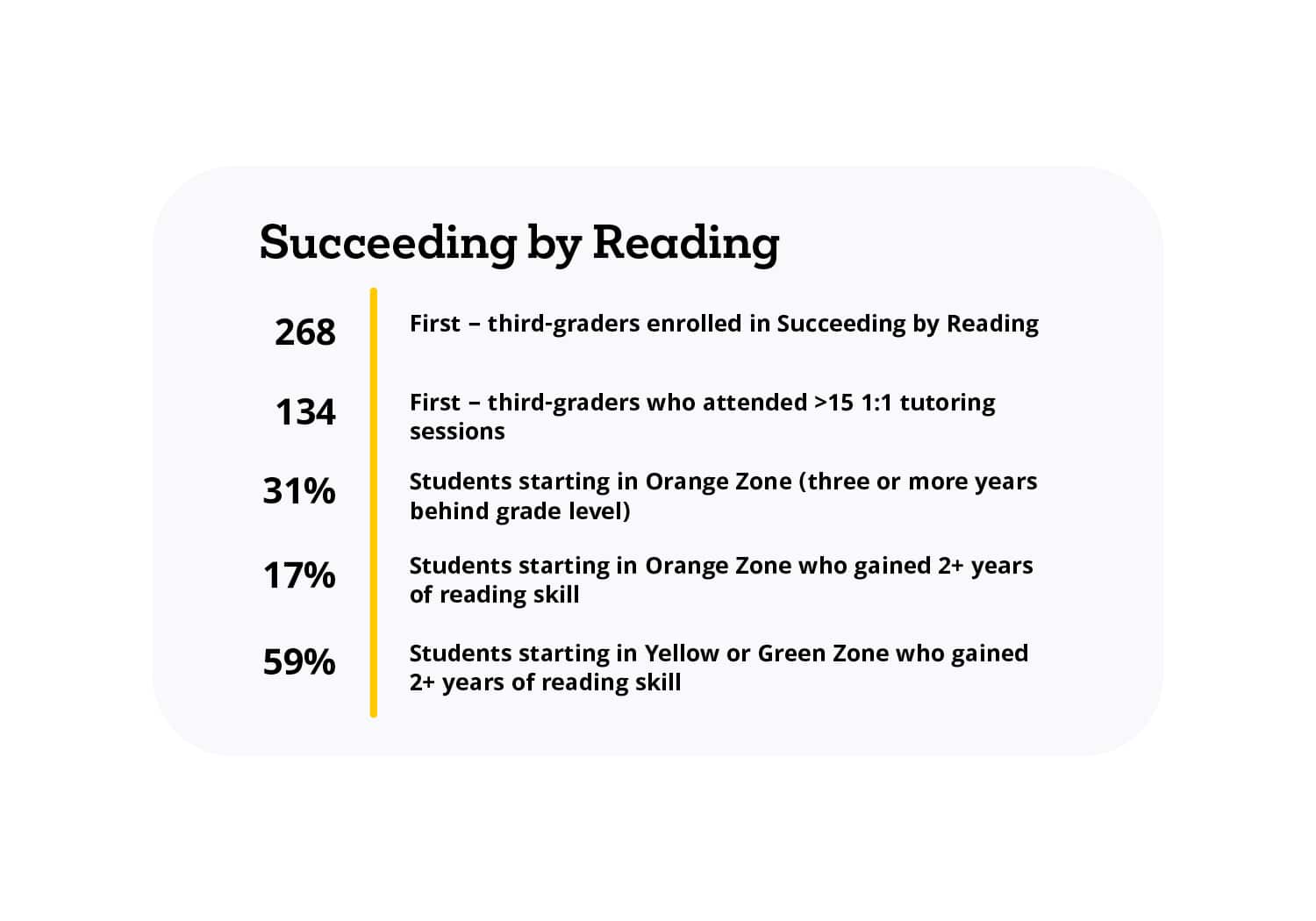
31% of first and second-graders were three or more years behind in reading—a pre-K reading level.
We implemented alternative versions of our programming to address the children’s unprecedented needs:
1. Fourth and fifth-graders, many of whom were at a K or first-grade level in math, received tutoring for the first time.
2. A new literacy instructional zone and materials for the second and third-graders who were testing at a Pre-K or K level in reading.
3. Homework tutoring for children struggling with grade-level homework assignments they couldn’t understand because they had missed the required foundational skills.
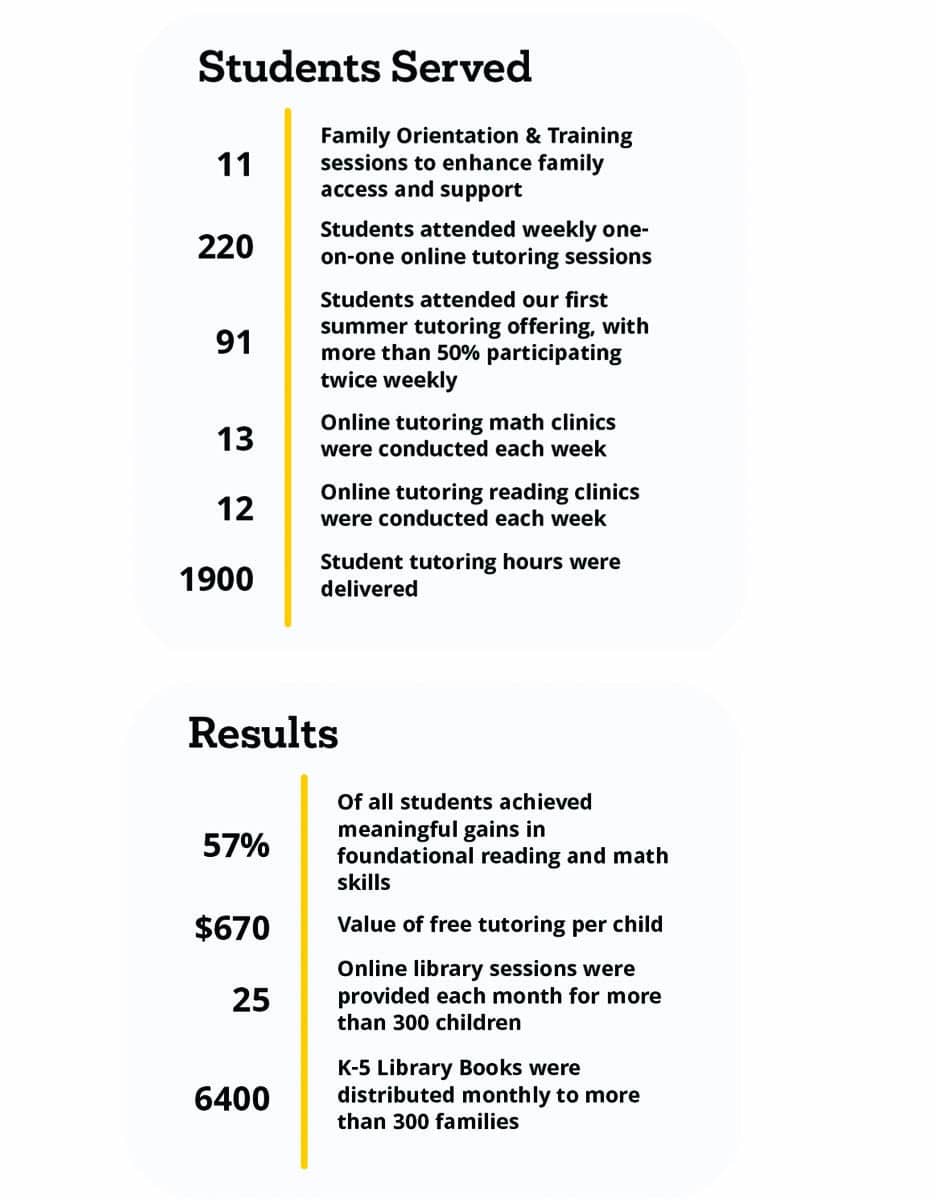
2022 – 2023 Program Highlights Include:
One-on-one tutoring empowers children in their efforts to learn to read, and encourages them with positive role models, library services, and additional books to fuel the love of reading.

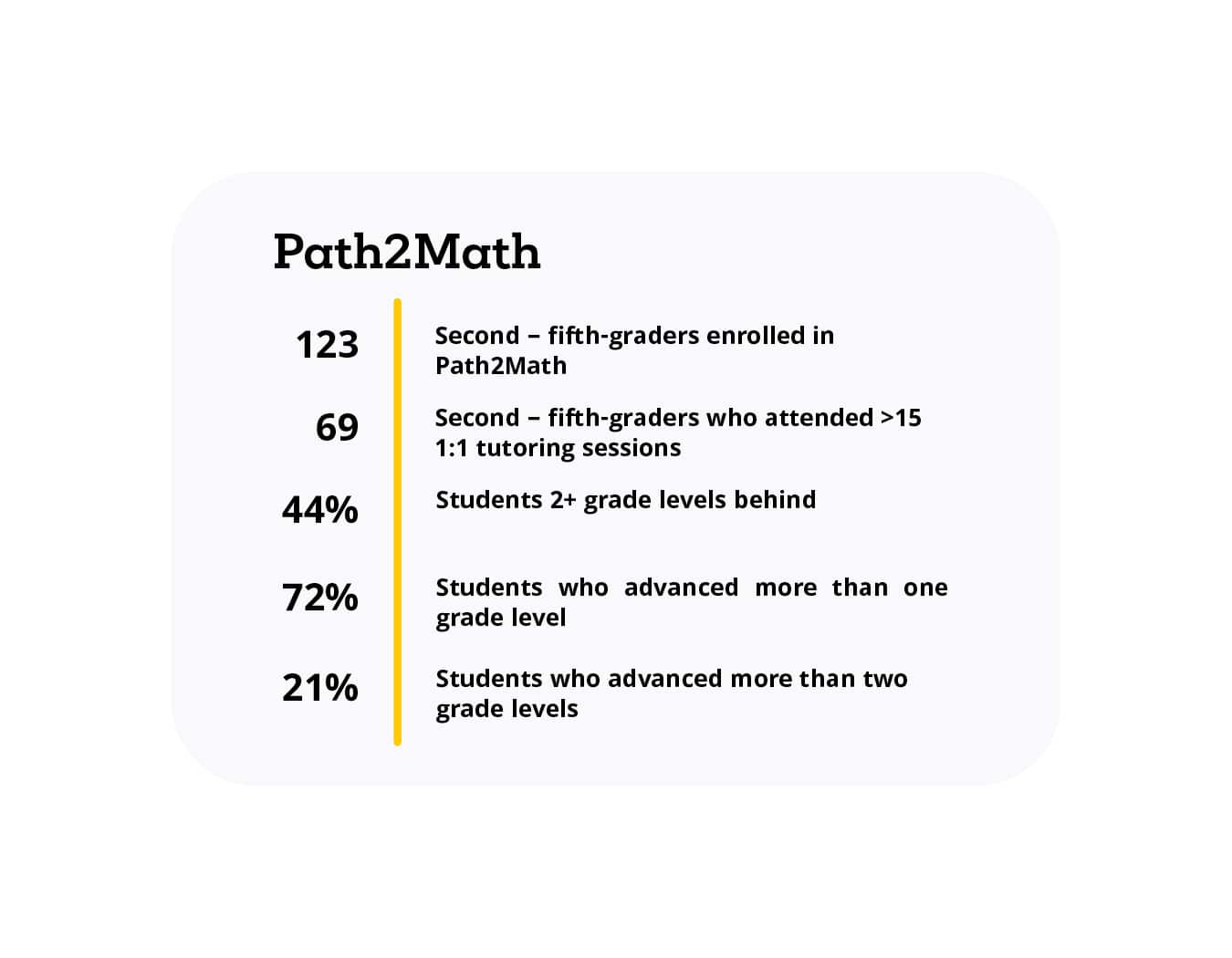
Co-developed with OUSD math education specialists, our one-on-one tutoring empowers children struggling with math to develop foundational numeracy skills and enhanced critical reasoning abilities, and encourages them with positive role models.

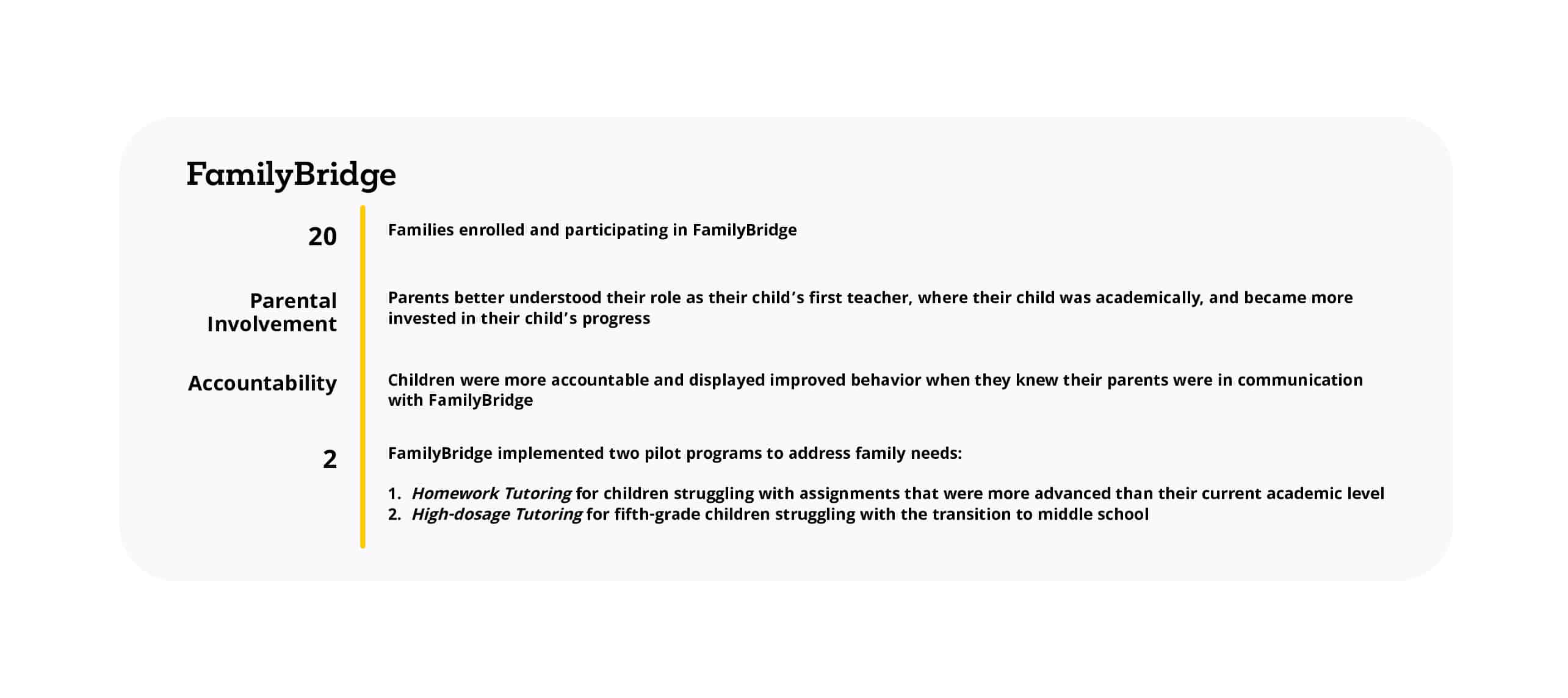
For the 2022-2023 school year, we launched FamilyBridge. The all-new program partners with families who have children enrolled in our tutoring programs. The goal is to enable them to develop the skills, confidence, and tools to accelerate their child’s learning and advocate for their vision of their child’s academic growth.